Find Water Ski Rope for Packaging, Shipping, and Outdoor Gear
Source 30 verified Water Ski Rope options from Chinese manufacturers. Buyers can compare specifications like material, size, and certifications to find suitable solutions for packaging, shipping, and outdoor gear applications.
Key considerations
Products List


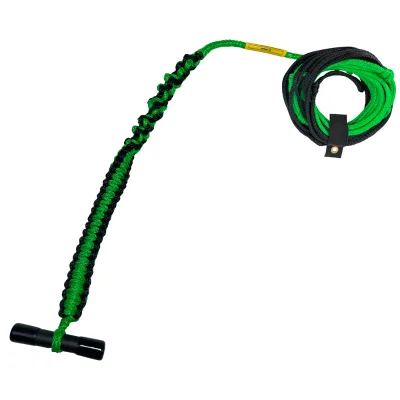
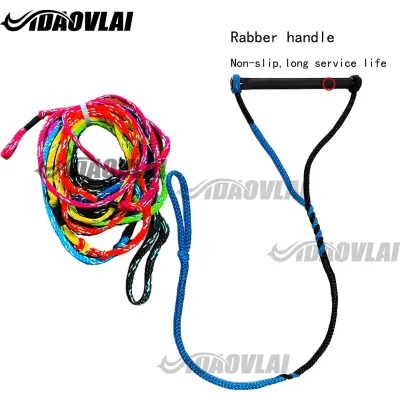


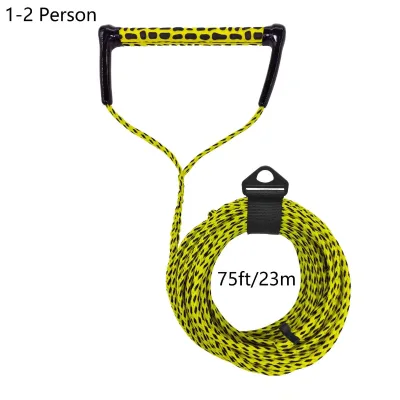


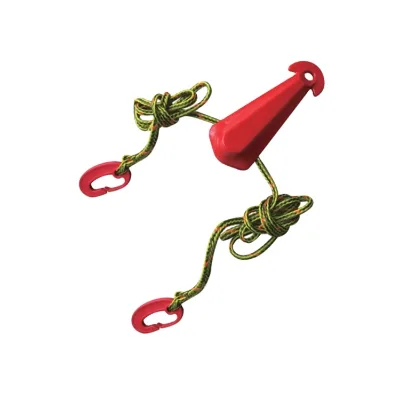


Comprehensive Sourcing Guide
Strategic Sourcing Guide for Water Ski Ropes
Understanding Technical Specifications and Material Composition
When sourcing water ski ropes, the primary objective is to identify products that balance tensile strength with the specific elasticity required for high-performance water sports. The core technical differentiator in this category is the material composition, which directly dictates the rope's behavior under load. Based on available market data, water ski ropes are predominantly manufactured using Polyethylene (PE) or Polypropylene (PP) fibers. These synthetic materials are selected for their high strength-to-weight ratio and resistance to water absorption, ensuring the rope does not become heavy or degrade rapidly when submerged.
The physical dimensions of the rope are equally critical. Sourcing specifications indicate that diameters typically range from 2mm (5/32") up to 20mm (3/4"), though specific water ski applications often utilize a narrower band, such as 8-10mm. The length of the rope is another variable that must be aligned with the intended use case. Standard offerings include fixed lengths such as 10m, 20m, 30m, and 40m, while custom manufacturing allows for sizes tailored to specific boat or rider requirements. Buyers must verify the exact diameter and length against the manufacturer's specification sheet, as a deviation in diameter can significantly alter the drag coefficient and the "snap" felt by the rider during a jump.
Furthermore, the construction method plays a vital role in performance. The market frequently features braided rope designs, which offer superior flexibility and resistance to kinking compared to twisted alternatives. Some products are explicitly categorized as "Water Ski Rope" with features designed to minimize stretch. This characteristic is essential for water skiing, where a rope with too much elasticity can dampen the energy transfer from the boat to the skier, making jumps and turns less responsive. Conversely, a rope with minimum stretch provides a more direct connection, allowing for precise control.
Compliance, Certification, and Safety Standards
In the B2B procurement of water sports equipment, verifying compliance and certification is not merely a formality but a critical risk management step. While the specific safety standards for water ski ropes can vary by region, suppliers often provide certifications such as CE (Conformité Européenne) and ISO 9001. These certifications indicate that the manufacturing process adheres to international quality management systems and that the product meets specific safety requirements for the European market.
When evaluating a supplier, buyers should request documentation proving that the specific batch of water ski ropes has undergone testing for UV resistance. Water ski ropes are frequently exposed to intense sunlight, which can degrade synthetic fibers over time. A product feature list often highlights "Good UV Resistance" as a key attribute, but this claim must be substantiated by test data or certification records. Additionally, the material composition, whether PE or PP, should be verified to ensure it meets the durability expectations for the intended application.
It is important to note that while some suppliers may list certifications like GS (Geprüfte Sicherheit) alongside ISO 9001, the presence of these marks does not automatically guarantee that every SKU in a supplier's catalog meets the same standard. Procurement teams must ensure that the specific model number being ordered, such as those designated for water skiing, carries the relevant certification. The origin of the product, often listed as China, particularly from regions like Sichuan, should be cross-referenced with the supplier's quality control history to ensure consistent adherence to these standards.
Cost Drivers and Pricing Dynamics
The pricing of water ski ropes is influenced by a complex interplay of material costs, customization levels, and order volume. The observed market price range for these products is broad, spanning from approximately $0.20 to $40.64 USD. This wide variance is not indicative of a single product type but rather reflects differences in material quality, rope diameter, length, and the level of customization required.
One of the most significant cost drivers is the degree of customization. Products that offer customized colors, specific lengths, or unique braiding patterns typically command a higher price point than standard off-the-shelf items. For instance, a standard black or green rope in a fixed 23m length may fall on the lower end of the price spectrum, whereas a rope with a customized color and a specific diameter for a professional athlete could be significantly more expensive.
Order Volume (MOQ) also plays a pivotal role in the final unit cost. Suppliers often set Minimum Order Quantities ranging from 100 to 3,000 pieces. A buyer ordering 100 pieces will likely face a higher per-unit cost compared to a buyer placing an order for 2,000 pieces. The data suggests that some suppliers have an MOQ of 100 PCS, while others may require 200 PCS or higher. Buyers must calculate the total landed cost, including shipping and tariffs, against the MOQ to determine the most economical purchasing strategy. Additionally, packaging requirements, such as cartons, hanks, or plastic reels, can add to the overall cost, especially if specialized packaging is needed for retail display.
Typical Applications and Usage Scenarios
Water ski ropes serve a specialized function within the broader category of outdoor gear and sports equipment. The primary application is, as the name suggests, water skiing. These ropes are engineered to withstand the dynamic forces generated when a skier is towed behind a boat, including the sudden tension spikes that occur during jumps or sharp turns. The "minimum stretch" feature is particularly valuable here, as it ensures the rope responds instantly to the skier's movements without absorbing excessive energy.
Beyond recreational water skiing, these ropes find applications in other water sports and industrial settings. Some products are marketed for use in water skiing specifically, while others are versatile enough for general outdoor gear, security, and shipping purposes. The material properties, such as the light weight and resistance to UV degradation, make them suitable for prolonged exposure to harsh environments.
The versatility of the rope is further highlighted by its usage in scenarios requiring high visibility and durability. For example, ropes with specific color options, such as green or black, or even assorted colors, can be selected based on visibility needs or branding requirements. In industrial contexts, the same braided construction and high-strength materials may be utilized for security applications or heavy-duty shipping tasks. However, when sourcing for water sports, buyers must ensure that the rope's tensile strength and elasticity are optimized for the dynamic loads of skiing, rather than static loads typical of shipping or security applications.
Supplier Evaluation and Sourcing Strategy
Selecting the right supplier for water ski ropes requires a rigorous evaluation process that goes beyond price comparison. Buyers should prioritize suppliers who demonstrate transparency regarding their production capabilities and quality control measures. The presence of processing services, such as moulding, indicates a supplier's ability to produce custom components or specialized fittings that may be integrated into the rope system.
When assessing a potential supplier, buyers should verify the consistency of their product models. The market features various model numbers, such as SR-1, CB-DL-1, CR-8, and specific series like 3552111, 3552211, and 3552411. Each model may correspond to different specifications regarding material, diameter, or length. A reliable supplier will have clear documentation linking these model numbers to their specific technical attributes.
Furthermore, the supplier's location and logistics capabilities are important factors. Many suppliers are based in China, with specific origins noted in regions like Sichuan. Buyers should consider the lead times and shipping logistics associated with these locations. While the supply chain is generally robust, understanding the specific lead times for custom orders versus standard stock items is essential for maintaining inventory levels.
Quality Control and Long-Term Procurement Considerations
Implementing a robust quality control (QC) protocol is essential for ensuring the longevity and safety of water ski ropes. Buyers should establish clear acceptance criteria based on the observed product attributes, such as color consistency, braiding integrity, and dimensional accuracy. For instance, if a product is specified as "Green," the QC process must verify that the color matches the agreed-upon standard and does not fade prematurely due to poor UV resistance.
Long-term procurement considerations also involve the supplier's ability to maintain consistency across batches. As production scales, variations in material quality or braiding tension can occur. Buyers should request sample testing results and, if possible, conduct third-party inspections on incoming shipments. The ability of the supplier to provide customization, such as specific packing methods (hank, spool, coil, or plastic reel), is also a key factor in long-term relationships.
Finally, buyers should consider the lifecycle of the product. Water ski ropes are subject to wear and tear, and the supplier's reputation for durability is a critical metric. By focusing on suppliers who emphasize features like "light weight" and "minimum stretch," buyers can ensure that the products they source will perform reliably over time, reducing the risk of product failure and associated liability issues. The integration of these quality and sustainability factors into the procurement strategy will ultimately lead to a more resilient supply chain and satisfied end-users.
FAQs
What materials are used for water ski ropes?
Water ski ropes are primarily manufactured using Polyethylene (PE) or Polypropylene (PP) fibers. These synthetic materials are selected for their high strength-to-weight ratio and resistance to water absorption, ensuring the rope does not become heavy or degrade rapidly when submerged.
Which certifications should water ski ropes have?
Suppliers often provide certifications such as CE and ISO 9001 for water ski ropes. These certifications indicate that the manufacturing process adheres to international quality management systems and that the product meets specific safety requirements for the European market.
How does customization affect the price of water ski ropes?
Products offering customized colors, specific lengths, or unique braiding patterns typically command a higher price point. A standard black or green rope in a fixed length may fall on the lower end, whereas a rope with customized features for a professional athlete could be significantly more expensive.
What is the typical minimum order quantity for water ski ropes?
Minimum Order Quantities for water ski ropes range from 100 to 3,000 pieces depending on the supplier. Buyers ordering 100 pieces will likely face a higher per-unit cost compared to those placing orders for 2,000 pieces, so total landed cost must be calculated against the MOQ.
Can water ski ropes be sourced from China?
Yes, many suppliers for water ski ropes are based in China, with specific origins noted in regions like Sichuan. Buyers should consider the lead times and shipping logistics associated with these locations when planning their procurement strategy.
What are the standard lengths available for water ski ropes?
Standard offerings include fixed lengths such as 10m, 20m, 30m, and 40m, while custom manufacturing allows for sizes tailored to specific boat or rider requirements. Buyers must verify the exact length against the manufacturer's specification sheet to ensure proper performance.
What features make a Water Ski Rope suitable for sports?
Key features include light weight, minimum stretch, and good UV resistance. The minimum stretch characteristic is essential for water skiing, as it ensures the rope responds instantly to the skier's movements without absorbing excessive energy during jumps or turns.